Helping Your Homeschool Children Become Entrepreneurs
As homeschool moms, we have a beautiful opportunity.
We get to do more than teach our children reading, writing, and math. We get to help them discover how God made them. We get to nurture their gifts, strengthen their confidence, and expose them to ideas that may one day grow into a business, a calling, or even a lifelong career.
Some children are natural builders. Some love to organize. Some are creative. Some are good with people. Some are problem solvers. Some notice needs that other people overlook.
That means entrepreneurship does not have to start with a formal business plan or a big investment.
It can start much smaller than that.
It can start with observation.
It can start with interest.
It can start with letting your child try things, serve people, learn from others, and discover what they enjoy doing.
Expose Them to Different Kinds of Businesses
One of the best things we can do is simply let our children see how different businesses work.
Take them with you when you can. Talk about what people do for a living. Point out business owners in your community. Let them notice that not all work looks the same.
Some businesses are hands-on and practical.
Some are creative.
Some are online.
Some involve helping people.
Some involve making things.
Some involve fixing things.
Some involve teaching, organizing, designing, writing, cooking, cleaning, caring, or selling.
You might expose your children to businesses like:
- Baking and cake decorating
- Lawn care or landscaping
- Pet sitting or dog walking
- Babysitting or childcare
- Photography
- Cleaning services
- Sewing or alterations
- Baking and selling homemade goods
- Tutoring younger children
- Crafting and handmade products
- Car detailing
- Flower arranging
- Bookkeeping or office help
- Social media help
- Web design
- Printing or custom shirts
- Home organizing
- Lawn and garden work
- Repair and handyman work
The point is not that your child must do one of these exact things.
The point is to help them see possibilities.
As they observe different businesses, they may suddenly say, “I could do that,” or “I would like to try that,” or “I never thought about that before.”
That is a good place to begin.
Start with Their Interests and Strengths
A child who loves animals may do well in pet care.
A child who loves babies may enjoy childcare.
A child who likes art may be interested in handmade products or design.
A child who likes to talk may do well in customer service or sales.
A child who likes organizing may enjoy office tasks, planning, or helping with inventory.
A child who loves to build may be interested in tools, repairs, or woodworking.
A child who loves to write may enjoy editing, blogging, or social media.
A child who likes numbers may enjoy bookkeeping or budgeting.
We should pay attention to what delights them.
Not every child will become an entrepreneur.
But many children can benefit from learning to think like one.
They can learn to notice needs.
They can learn to solve problems.
They can learn to serve people well.
They can learn that work has value.
And they can learn that they do not have to wait until adulthood to start developing useful skills.
Apprenticeship and Internship Matter
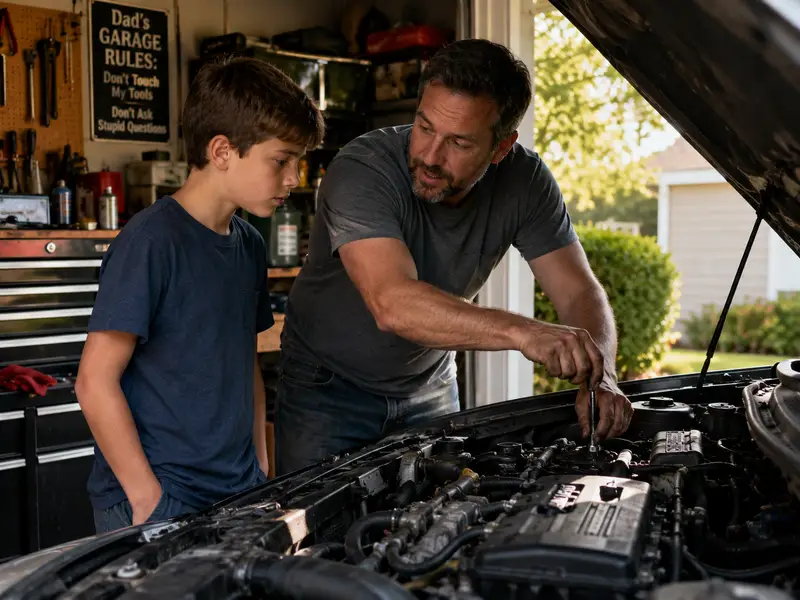
One of the best ways to learn is by watching someone else do it.
That is where apprenticeship and internship come in.
A child can learn so much by spending time with someone who already knows how to do a job or run a business.
They can observe how things are done.
They can ask questions.
They can practice skills in a real setting.
They can see what it looks like to serve customers, handle responsibility, solve problems, and work with excellence.
An apprenticeship may be informal.
It may be a family friend, a neighbor, a small business owner, or a relative who is willing to teach a child some skills.
An internship may be more structured.
It may be for an older teen who wants to learn more about a field and gain real-life experience.
You could ask questions like:
- What kind of work do you enjoy?
- Who do you know that does that kind of work?
- Is there someone we could ask to let you shadow them?
- Could you help for a few hours and learn by observing?
- What skills would you need to be helpful in that setting?
This does not have to be fancy.
It just needs to be real.
Business Skills Children Can Learn in Homeschool
Entrepreneurship is not only about selling something.
It is also about learning how to think, plan, communicate, and follow through.
There are many business skills children can begin learning at home.
Here are some good ones:
1. Communication
Children need to learn how to speak clearly, listen well, and communicate respectfully.
They can practice this by:
- making phone calls
- introducing themselves
- speaking to adults
- writing emails
- answering questions politely
- describing what they are offering
2. Money Skills
They should learn how money works.
They can practice:
- counting money
- making change
- budgeting
- saving
- tracking income and expenses
- setting prices
- understanding profit
3. Responsibility
A business owner has to follow through.
Children can learn responsibility by:
- completing chores
- keeping a schedule
- showing up on time
- finishing assignments
- taking care of tools and materials
- being dependable
4. Organization
They need to know how to keep track of things.
They can practice:
- sorting supplies
- labeling items
- keeping records
- making lists
- planning steps
- organizing orders
5. Problem Solving
Things go wrong in business.
That is part of life.
Children can learn how to think through problems by asking:
- What is the issue?
- What are the choices?
- What is the best next step?
- How can I fix it?
- What can I learn from this?
6. Customer Service
This is a big one.
They need to learn how to treat people well.
They can practice:
- being polite
- answering questions kindly
- serving others
- taking feedback without getting upset
- making things right when needed
7. Work Ethic
This is one of the most important things we can teach.
Children learn work ethic by doing real work.
They learn that:
- effort matters
- quality matters
- honesty matters
- consistency matters
- excellence matters
Ways to Practice Entrepreneurship at Home
You do not have to wait until your children are older to begin.
You can start in simple ways.
- Let them set up a lemonade stand
- Help them make baked goods to sell
- Have them make crafts for a small market
- Let them organize a neighborhood service project
- Encourage them to pet sit for a family friend
- Help them offer yard work or cleaning help
- Let them sell something they made
- Help them create flyers or a simple ad
- Have them practice taking orders
- Show them how to track costs and profit
These little experiences teach so much.
They give children confidence.
They teach them how to interact with people.
They help them see that their work can bless others.
Homeschool is a Great Place to Build Business Skills
One of the advantages of homeschooling is that we are not limited to just book learning.
We can weave life skills into everyday learning.
We can teach math through real money.
We can teach writing through emails and advertisements.
We can teach reading through instructions and research.
We can teach speaking through presentations and conversations.
We can teach planning through projects.
We can teach independence through responsibility.
We can teach our children how to learn, how to work, and how to think.
That is a wonderful foundation for entrepreneurship.
Encourage, Don’t Pressure
Not every child will want to start a business.
And that is okay.
Our job is not to force a path.
Our job is to observe, encourage, and help them explore.
Some children will try several things before they find what fits.
Some will know right away.
Some will need time.
Some will need a lot of help.
Some will need a little push and then they will run with it.
We should not compare them to one another.
We should not decide too quickly what they are or are not capable of.
We should help them grow in the direction God has gifted them.
Final Thoughts
If you want to raise entrepreneurial children, start by exposing them to possibilities.
Let them see different businesses.
Let them meet people who do different kinds of work.
Let them learn real skills.
Let them try things.
Let them watch.
Let them help.
Let them practice.
And as they grow, they may discover not only how to earn money, but how to serve others, use their gifts, and build something meaningful.
That is a beautiful thing to help a child do.
Action Steps
- Make a list of businesses in your community that your children could observe or learn from.
- Talk with your children about what kinds of work interest them.
- Look for a possible apprenticeship or internship opportunity.
- Choose 2 or 3 business skills to teach in your homeschool this month.
- Let your children practice one real-life money or business activity.








 "Oh that God would give every mother a vision of the glory and splendor of the work that is given to her when a babe is placed in her bosom to be nursed and trained! Could she have but one glimpse in to the future of that life as it reaches on into eternity; could she look into its soul to see its possibilities; could she be made to understand her own personal responsibility for the training of this child, for the development of its life, and for its destiny,--she would see that in all God's world there is no other work so noble and so worthy of her best powers, and she would commit to no other's hands the sacred and holy trust given to her." -JR Miller